Thursday, February 25, 2016

The Importance of Recovery in Cerebral Palsy

In the race to achieve developmental milestones, promote dynamic movement, and improve overall function, I have found that the "larger picture" is sometimes clouded if not lost completely.  By this I mean that the human organism operates (oscillates) within what I like to call a specific Biophysical Continuum.  In other words, we are not simply "ON" all the time...in fact, we exist within specific "states" of activation.  By activation, I refer to what is the predominant systemic / biomechanical system operating at any given time. 


This perspective is an attempt to provide some clarity on the human organism (person) as a whole...or as a "Supersystem" that is something more than just the sum of separate individual systems.  Rather, it is an exponentially complex and inter/intradependent piece of evolution and engineering.  In effect, it is likely beyond our current capabilities to truly comprehend...which is why the Biophysical Continuum is a valuable tool in navigating the journey through neurodevelopmental challenges. 


Biophysical Continuum


 As shown in the graphic above, we can effectively separate a full day into 3 formal "states":


1. Activation
2. Relaxation
3. Recovery


Being a continuum, there is no explicit "point" at which one state becomes another...rather that we "slide" seamlessly from one state to another, and at many times during the day, we exists in a state that can be a hybrid "blend" of either activation / relaxation and relaxation / recovery. 


Activation can be formally identified as "exercise and movement".  To be precise, it is manifest by HIGH levels of muscular, neurological, and mental resources.  There is a higher rate of catabolic activity which contributes to increased levels of metabolic build-up (lactic acid, etc...) which is toxic to the body and needs to be flushed, and there is a greater stress on biomechanical architecture and neurological resources (concentration).  Relaxation can be misleading, however within the context of this post, I refer to it as those mental and physical activities that take place during the course of the day.  In other words, the "routine" that takes place when we are not either sleeping or exercising.  In this phase, the mental / neurological / physical requirements are well within tolerable limits...mainly because they are likely to be habits that have become somewhat "automatic" and are essentially done within any real conscious effort or concern.  More importantly, systemic function is essentially at a "net zero" level...meaning that there is a sufficient amount of "input" to satisfy the required "output".  Recovery is most accurately defined as "sleep" (and in many cases, meditation as well).  It is during this phase that our systemic "oscillation" (respiration, digestion, lymphatic system, microcirculation) plays a primary role while the neuromuscular "engine" reverts to a primitive and formal "off" state.  This is THE state at which our evolutionary development and "operation" are hard at work.  We slip from any voluntary / conscious influence and are essentially operating on the autonomic / involuntary / primitive level. 


This is where we formally enter into our most valuable self-healing, self-regulating, and recovery phase.


If we assign a generic amount of time during a 24-hour day, we are presented with a breakdown that approaches something like the graphic above.  If we assume an average amount of sleep that centers around 8 hours (a lot for some and too little for others, but you get my meaning), an average of 30-60 minutes of what could be considered as "exercise / movement" based activity, and the remaining 15 hours manifested as "daily activity"...we are left with a "colour-code" that looks like that.  In essence, this is an example of an environment that is sustainable.


If we consider the realities in CP (and all neurodevelopmental disorders, in fact) we get a vastly different picture.  Disorders of movement and posture require extremely high levels of muscular activation (even to accomplish those tasks that we generally consider "easy") as well as high levels or mental resources.  To be precise, many if not most of what we normally classify within the context of "daily activity", falls into the category of "athletic exercise" in the individual with CP. 


The ultimate outcome is an environment that stresses ALL systemic and biomechanical resources...the result of which are those common challenges we see with alarming and consistent regularity:


-underweight
-low bone density
-digestive distress
-muscle wasting
-immune system dysfunction
-altered respiratory mechanics
-low circulating oxygen
-hormonal imbalances
-etc, etc...


All of this taking place under the influence of (in most cases) irregular and/or insufficient sleep patterns.


The "bottom line" is that the mechanical and systemic equivalent in a healthy individual is something akin to exercising 14 hours a day, sleeping about 4 hours a night, and leaving approximately 6 hours to accomplish everything else we would attribute to daily function (eat, shower, leisure, study, work).  When placed within THIS context, the stress on the CP body becomes more clear...it is an enormous challenge to a growing organism


The body does not have adequate time to engage in the process of self-healing and self-regulation...meaning that recovery is insufficient and incomplete.


In summary, my primary message is intended to reflect the following:

ANY strategy that contributes to relaxation and enhanced sleep potential is a valuable and VITAL component to all rehabilitation plans.  Although all of the efforts to improve movement, balance, coordination, fine motor skill, etc...are critically important, they also ADD to the biomechanical, systemic, and neurological daily requirement.  Therefore, a careful and focused effort to potentiate the "rest and recovery" of an individual with CP will result in a Biophysical Continuum that is more harmonious and consistent with a sustainable supersystem.


In essence, the "investment into recovery" pays HUGE dividends within the realm of movement and dynamic function.  A system that is rested, fresh, and fluid will perform significantly better...which ultimately results in a better rate of progress.  More importantly, it "raises the ceiling" of potential and greatly enhances the prognosis and opportunity for a best-case scenario.


Cheers!


Friday, February 12, 2016

Early Detection and Intervention: Strategies for Immediate Action

One of the most frustrating realities within the context of Cerebral Palsy (CP) is that "diagnosis", as such, is generally made around the age of 2 years old.  In other words, although it may be known that there is SOME level of neurological damage (or at the very least the POSSIBILITY of neurological damage), the "call to action" with respect to a definitive rehabilitation plan is generally deferred until after an official diagnosis is confirmed.  To be clear, this is not to say that nothing is being done nor does it mean that best interests are not taken into account...what it does mean, however, is that specific strategies and action plans become significantly more defined and clear once the diagnosis has been made.  The logical question people are likely to have after reading that last statement is:    what's so strange about that?  The answer comes back in the form of another practical question:


Why must we wait until things are so "black" before we act?


In other words, there are many things that can be done within the "grey areas" that do not necessarily require a "diagnosis" in order to confirm viability.  Further, the first 12-24 months of life present enormous opportunities to implement profound change due to the high level of neuroplasticity and biomechanical compliance.  The need for a diagnosis goes well beyond the practical debate and extends into issues of liability and systemic function of the medical system...to be precise, almost the entire rehabilitation plan is pre-set  based on the diagnosis.  Although I agree with the necessity for standardization over customization (especially when we are speaking about providing a service to a larger mass of people), it does not mean that there is no room for individual strategies to be formulated that will result in a plethora of tangible (and intangible) positive outcomes. 

The next level of questioning is likely to be quite intuitive: 


If we don't have a diagnosis, how will we know where to start?


From a broader and more global perspective, we simply need to understand the fundamental reality that, regardless of whether there is a specific pathology involved or not, every human being requires healthy and robust systemic function (vital functions) in order to sustain life.  More specifically:


-Respiratory Mechanics
-Lymphatic Function
-Microcirculation (blood and interstitial / intercellular fluid)


Regardless of the diagnosis (or even the presence of a pathology), these are considerations that can be addresses and potentiated in a more immediate fashion.  This lends to the "organic" perspective as a precursor to the "mechanistic" perspective.  In other words: 


The diagnosis establishes the mechanistic strategy ("what is not working and how do we fix it") while early intervention establishes the organic strategy ("what is working and how can it work better").


It should be said that both of these perspective play a role in an effective and efficient rehabilitation strategy...however, the insertion of an organic perspective is what (in my opinion) is generally lacking and even overlooked completely. 

Early Detection:

One of my most proud accomplishments with respect to Fascia Therapy is the fact that it addresses these specific "voids" within the strategic options that parents / families / care-givers have.  Beyond being a viable "standalone" platform, adjunct / complement, and tactical management strategy, it has a well defined protocol for early detection and intervention.

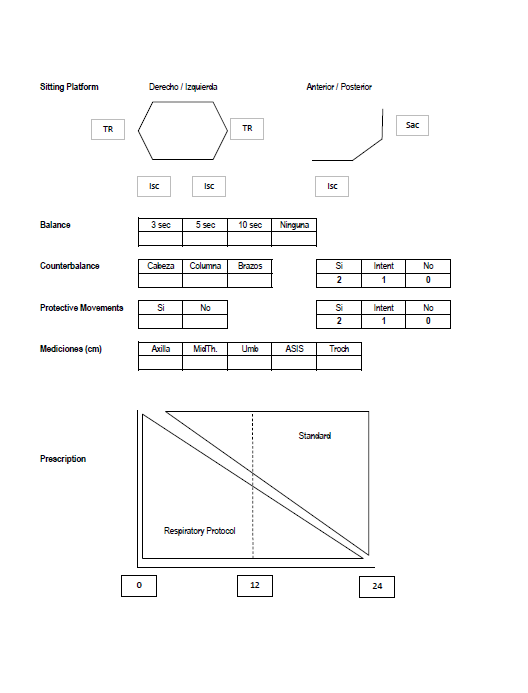
Over the last 3 years, I have been fortunate enough to work with Dr. Veronica Delgado who is a well known physiatrist and doctor in Chile.  She has essentially formulated an "Early Detection Protocol" that uses a simple scoring system to identify potential markers for neurological impairment.  In addition (and in conjunction with), I have formulated a specific evaluation protocol that identifies postural and structural markers as well. 


Using both the neurological and structural metrics, we are better able to identify levels risk and therefore set a proper early intervention strategy. 


Early Intervention:


As stated earlier, as well in a few of my earlier posts on the importance of respiratory mechanics in neurodevelopmental disorders Part 1 and Part 2 , addressing and potentiating improved respiratory function extends not only into the systemic understanding, but has PROFOUND implications on the development of the pelvis and shoulder girdle...thereby having direct influence on health and function of the hips, legs, and arms.  This perspective is something that is worth a read / re-read. 

The Fascia Therapy concept addresses this consideration with what is called the Respiratory Protocol which has proven to be a valuable complement to early intervention strategies as well as part of a larger management strategy for all ages with neurological challenges. 

Along with the respiratory protocol, there are a group of specialized techniques that potentiate and enhance microcirculation, more specifically interstitial fluid.  To put it briefly, interstitial fluid is essentially the medium by which waste product is transported from the bloodstream to the lymphatic system...therefore having a profound impact on systemic health and homeostasis.  On addition, immune system function depends greatly on robust interstitial fluid flow.  In CP, microcirculation is greatly diminished and effectively manifests in poor tissue quality (colour, texture) as well as overall systemic deficits (chronic illness, stiffness, injury).  Being able to properly identify priority "targets" using these techniques greatly enhances systemic homeostasis and ultimately produces a stronger and more resistant organism. 


In summary, this post is intended to underscore the reality that, although "black and white" situations do indeed exist, the "grey areas" are exponentially larger...and they should be looked at as opportunities to implement profound, permanent, and lasting improvement. 

Cheers!

Gavin


Saturday, January 9, 2016

Functional Range Conditioning for Cerebral Palsy: Introduction


This post has taken quite awhile to "come to print"...for no other reason other than it is the result of many rounds of formulation / implementation / re-formulation.  In essence, it is meant to be an evolution to the more common question raised both here in this blog and within the Cerebral Palsy (CP) landscape in general: Is stretching good or bad?   This is a question that I broach in an earlier post from 2012 called Stretching and Cerebral Palsy: What you should know.  If you have not read that entry yet, it goes into the specific challenges of stretching strategies in CP...but more importantly, it sheds some light on the actual biomechanical realities of this intervention.  As you will read (or may have already read) in that post, I don't identify a "clear winner" as to whether stretching is good or bad (or whether people should or shouldn't)...rather that it is something that requires some significant thought and formulation.  Additionally, we should be very careful when we attempt to "import" rehabilitation strategies we use in the healthy population to the world of CP.  The biomechanical and architectural realities are so different that we need to approach mechanical issues with significantly more care, analysis, and formulation. 

Taking all of this into account, I will begin the process of sharing a strategy I have called Functional Range Conditioning for CP.  It is a relatively comprehensive set of skills from the objective observers perspective that is based in an equally "heavy" physiological foundation...but at the same time, it is something that lends well to the "end-user".  This means that it has been specifically formulated to resonate well with any parent / care-giver and therefore serve as a valuable tool that can be used directly in the home.

The term "Functional Range Conditioning" is something I have essentially borrowed from an already established methodology used in athletes that efficiently and effectively frames an essential (and fundamental) reality:


In order for functional performance to improve (and thus reach maximum potential), we must first ensure that joints actually behave as joints.  If the singular articulations are dysfunctional, then the movement potential of the entire body is limited.  


Therefore, the strategy --- when addressing the issue of restricted / reduced ranges of motion --- is to first identify the dynamic behaviour of the joints before engaging in any active (or aggressive) stretching protocols.


Mitigating the challenges and risks of stretching

Challenges and risks??!  These specific things are identified in detail in the earlier stretching post, but once you have absorbed these risks and challenges, the next practical question becomes: 


"How do I (we) navigate and reduce them?


One of the MANY architectural challenges in CP is the inherent "mismatch" between the excessive strength (tightness) of the muscle fiber and the relative weakness of the connective tissue "anchors" (tendon, tendon attachment to the bone).  In other words, when we import a standard stretching protocol to CP, it is impossible to confidently be sure that the stretch itself is actually stretching muscle or in fact stressing / straining the tendon and/or the attachments to the bone. 

Therefore, before any angular (dynamic) movement is done, we should first provide some essential "nutrition" to the joint itself.  This is the first step in Functional Range Conditioning:


1. Joint Health and Nutrition

In order to achieve true productive range of motion, the joints MUST be healthy (or as healthy as possible) and formally behave (perform) as they are designed.  The reality in CP is that the majority of the synovial joints manifest moderate to profound stiffness.  In other words, the joint capsule (the connective tissue that covers the entire joint like a sac) manifests a certain fibrosis.  This means that rather than being a pliable and adjustable membrane, it is tight, fibrous, and relatively unforgiving. 

"Sponge Analogy"

I have used the Sponge Analogy on many occasions and I can honestly say that it is one of my most favorite ways of explaining joint behaviour in a way that is almost instantaneously understandable. 

Joint require a certain level of fluid...not only within the joint itself, but within the layers of tissue and even down to the cellular level.  This fluid essentially "bathes" the joint...providing not only lubrication and movement freedom, but also NUTRIENTS.  When a joint is fibrotic, it can formally be related to a dry sponge.  


The image above essentially demonstrates the 3 states that joints can manifest.  They should not be considered as 3 separate states, however...this should be looked at as a continuum.  Meaning that there is a gradual change in state when we move from one extreme to the other. 


Dry Sponge

The dry sponge represents the fibrotic joint.  It is rigid, in some cases distorted, and very much devoid of nutrients. 

Moist Sponge

This is meant to represent the "ideal homeostatic state" of a joint.  There is sufficient amounts of interstitial fluid to maintain its integrity as well as provide it with the required amount of nourishment.

Wet Sponge

The wet sponge represents the joint that has experienced some form of trauma...whether it be an acute injury or the result of long-term chronic stress.  Think of this as swelling or edema.

If we consider this analogy, then imposing angular dynamic movement (stretching) around this joint can potentially (if not likely) run the risk of unseen (and potentially de-stabilizing) injury or insult.  As a matter of strategic wisdom, when we are dealing with the challenges of CP and stiff / fibrotic joints...


The first "order of business" is to implement those techniques and interventions that are the most efficient at moving and mobilizing Interstitial Fluid towards the joint itself.


These techniques and interventions are part of the specific skillset and toolset used within the Fascia Therapy framework and are easily delivered during our training sessions. 


2. Functional Range Development

This step is implemented after (or in some cases, concurrently) the joint health and integrity step.  This step has 2 fundamental aspects:  a)  use specialized manual techniques to relax stiff and tight muscle...and b) impose progressive multi-joint movement patterns (using varied tools such as pilates balls and stability balls) to engage and activate the entire neuromuscular chain just as it would be engaged and activated in a real-life environment.


These movement patterns are quite varied and are essentially dependant on the individuals intrinsic movement competence and abilities...however, they are implemented based on the process of natural human motor development and formally help to potentiate movement through the developmental process in a more efficient and timely manner. 


In summary, this is only an initial overview of the framework of Functional Range Conditioning.  As with any approach, it should not be considered as a magic bullet...nor does it's existence and/or implementation negate or diminish the outcomes of other strategies.  It is meant to serve as a viable and realistic adjunct to all long term rehabilitative strategies...more specifically, a safe and effective way to develop, activate, and nourish better movement coordination and performance. 

More to come!

Cheers,
Gavin 


Sunday, November 29, 2015

Rigidity and Spasticity: What's the Difference?

This is a question that, strangely enough, does not get asked very much...at least to me.  The reason I would categorize this fact as "strange" is that, within the context of neurodevelopmental disorders, they manifest quite differently...and with respect to their effect / affect ratios, they both present vastly different challenges.  In my estimation, the reason for this is partially the fault of the general population of medical professionals...an unintentional error, of course.  It speaks to an underlying dysfunction which I have called a "Diagnostic Disability"...which in plain terms means that the medical / health profession at large are not using the same "technical language".  Although the alphabet is the same, words are used within vastly difference contexts and, over time, essentially become merged and "blurred".  The terms "rigidity" and "spasticity" are victims of this phenomenon and therefore have essentially become synonymous with each other.  As part of the process of navigating complex physical / physiological challenges (for both families AND professionals), it is important to (at the very least) take time to provide a well-defined "glossary of terms" so that those you work with have a clear understanding of what is being said. 

The medical physiology of rigidity and spasticity are relatively complex and therefore getting into these complexities would not be a productive exercise simply because the objective of this post (and the next post to follow) is to provide a global understanding that is easily integrated and which can be built upon.  As always, information is best absorbed in "digestible" chunks. 

Within the realm of Cerebral Palsy (CP) and other disorders of movement and posture, it is important to remember (and understand) that muscular dysfunction cannot be classified into specific and explicit "categories"....that is to say, nothing in the real world is a manifestation of one pure issue.  Everyone is essentially a tangled mix of tension, stiffness, weakness, rigidity, spasticity, etc...even more so, they all overlap with each other in many ways.  To be specific, the observable MANIFESTATIONS of any and all of these issues often appears the same.  With this in mind, the pressing challenge becomes how to identify the most prominent biomechanical muscular limitation ...with the end objective being to efficiently formulate effective treatment goals as well as implement the appropriate management strategy at home (sleeping, resting, feeding, etc...).   Being able to identify is always the first step...once that has been done, the process of "what to do about it" becomes more clear and therefore results in better treatment outcomes. 

1. Spasticity is velocity dependant whereas rigidity is not

The response to passive movement is an effective way to identify spasticity versus rigidity. A spastic muscle will generally appear relaxed when at rest, but when moved passively (extended) it will increase in tone and then return to a generally relaxed state when the movement is stopped.  The rigid muscle will express high tone at rest and throughout the entire movement.

2. Spasticity, in general, involves single muscle groups whereas rigidity is global

Although not considered to be a "black and white" reality, spasticity is oftentimes found to be present in the "anti-gravity" muscles such as the hamstrings, hip flexors, biceps, etc...  Rigidity, although can certainly be found in the anit-gravity muscles, is more commonly a global manifestation.

3. From a clinical perspective, long standing spasticity leads to contractures more than long standing rigidity.

This statement is a very generalized clinical statement which simply defines some of the treatment parameters.  Contractures are always an ever-present reality regardless of specific diagnosis or classification, however a long-standing situation of rigidity tends to result in less (or less severe) complications with contractures. 


The follow-up to this post will discuss some of the theory and strategies that parents / care-givers can implement immediately.  The issue of rigidity versus spasticity becomes more multi-layered when we realize that both of these (somewhat different and exclusive) manifestations is generally addressed in the same way:  STRETCHING.  I would recommend a read / re-read of my previous post on stretching and CP to absorb / re-absorb the underlying challenges and considerations of implementing stretching protocols.  Stay tuned for the second part of this post:

"ALTERNATIVES TO TRADITIONAL STRETCHING: HOW AND WHY"

Cheers!


Sunday, August 16, 2015

AFO's and Cerebral Palsy: Do or Don't?

Although it remains one of the main issues / topics discussed during almost every family meeting or training session, I haven't quite given AFO's (all orthotics in general) the attention it deserves.  The general perception on this issue is, for the most part, driven by untuition.  In other words, the feet are distorted so let's do something to straighten (or fix) them.  Despite this intuition, the same question arises with alarming regularity:

"Should we use them or not?"  

I have never been a big fan of blanket responses...meaning that there is very little I can answer with a short "Yes" or "No".  With respect to AFO's, the reality of what you should do will reveal itself once you walk yourself through a series of steps and practical questions.  This is to say that, the question of "should we or shouldn't we" is far to simplistic...this needs to be examined with a more comprehensive process and the "answer" is distinct for every family.


Every family will need to flash this question through their own "prism" and ultimately decide what is best for them and their shared value system...which is why I find it is much more efficient to avoid blanket responses and set a specific framework of understanding and examination so that every family will ultimately arrive at the most productive response.  The first practical question to ask yourself is:

What is (are) your specific intention(s) of using AFO's? 

AFO's (and orthotics) have been a rehabilitation option for hundreds of years.  The main difference / evolution has been that the materials used are lighter, customizable, and more efficient to manufacture...however the general mechanical premise is the same.  I mention this for a specific reason:

If the intention / objective of using AFO's is to reverse or "fix" a biomechanical distortion, this would be an over-simplification of a vastly more complex situation.  

Meaning that, historically there has been no significant evidence or research that points to the premise that AFO's reverse biomechanical distortion.  We then come to the next level of questioning and formulation:

If they do not reverse or fix anything, what use do they serve?

Again, the issue isn't whether they are good or bad, but how they are used and to what end.  AFO's are excellent adjuncts / complements to larger rehabilitation strategies for children who are either ambulatory or who demonstrate some level of weight-bearing (partial) directly on their feet.  Therefore...

AFO's are extremely valuable when the main objective is additional support and safety within a larger rehabilitation strategy for walking improvement / development.  

Foot Orthotic with Knee Orthotic
In other words, they can provide a significant window of opportunity to amplify and/or expediate the development process by imposing a small amount of support to otherwise weak articulations so that the ENTIRE biomechanical organism (the whole body) can engage and interact as a whole...as it is meant to do.

In some cases, this formulation can be overwhelming...and whereas more information is usually helpful, sometimes it can confuse as opposed to clarify.  Therefore, I can break down the process into something that is likely to be more user-friendly and easier to process.

Helpful "Do / Don't" Checklist

1. The use of the AFO associated with pain or discomfort.  DON'T

2. The use of AFO's results in more enagement and interaction with the environment.  DO

3. Is your child relatively functional and have some general weight-bearing ability already in place?
Yes --- DO
No --- DON'T

4. My goal is to reverse deformities in the foot. --- DON'T

5. The use of AFO's are part of a larger strategy. --- DO

In reality, this "checklist" is quite generic...but it serves to amplify the central premise that AFO's are neutral to the question of good or bad...right or wrong.  It is the specific intention that sets the framework for their efficient use.  It is easy to get caught up in the laws of contradiction...which is to say that, if their use is GOOD then their non-use is BAD.  The law of contradiction is a reality that simply states if one thing is 100% good all the time, then the opposite to that action is bad 100% of the time...which is far from the reality.

Again, this formulation is something that MUST be put through each family prism.  Therefore, it is perfectly acceptable that my very perspective is dismissed and discarded...but the issue is not convincing or "conviction" as such, rather to ensure that decisions are made VIA some form of analysis and exploration as opposed to the more simplistic (and perhaps convenient) mechanisms.  


Wednesday, August 5, 2015

Activating the hands in Cerebral Palsy

This post is a follow up to the previous post on sensory brain exercises for CP.  Although these sensory exercises are useful, they are somewhat limited when you are presented with a hand that is consistently (and/or rigidly) closed or fisted.  In addition, the closed fist is almost always accompanied and characterized by some distortion and asymmetry...both of which may make simple sensory exercises difficult and frustrating.  With this in mind, I wanted to shed some additional light on the issue of hands and (hopefully) provide some options and avenues for those parents and families that want to actively potentiate some improvement in the hands and, perhaps more importantly, provide some clarity on some realities about the developmental process...which always proves to be helpful and immediately useful.

"Don't put that in your mouth"

Words that every parent has said (or yelled) at one time or another, correct?  Although it is an intuitive understanding that babies / children will put things in their mouth, it is oftentimes difficult for parents (and people in general) to truly understand and formulate the reason why this is done...and universally across the board.  ALL humans do / did this!

 This type of behaviour is simply the manifestation of the natural developmental process of exploration and discovery.  In the first few months, a baby's visual field is still quite immature therefore in order to genuinely get "a sense" of themselves and their surroundings, they need to expose things to those senses that have reached a higher order.  In other words, they formally "feel" things with their mouths.  This includes hands, feet, and pretty much any object that is within reach. 

As a natural and healthy part of the developmental process, children will go through this phase during the first few months (and first year) and then when their visual competence and acuity begins to develop more, they will begin to actually grasp and hold things within their field of view.  Although they are still likely to put things into their mouths for "enhanced feedback", they will consistently stare at and track objects that enter their field of view. 

Missing Links and Activation in CP

When we put this into the context of CP (and neurodevelopmental disorders), the reality in many cases is that the opportunity to enter this exploration phase of "hands / feet / objects in the mouth" has never been experienced...whether due to direct neurological impairment, significant physical limitations, or both the hands (and even the feet) have never been fundamentally "woken up" or activated. 

Point of interest:  A new born baby will consistently manifest a closed fist (with the thumbs outside), but as he/she develops and begins the fundamental process of self-exploration, the hands and fingers are exposed to high levels of sensory input...essentially activating them, while at the same time the brain itself is formally "registering" the hands / feet and creating a working body map of them as well.    In CP, more specifically in those GMFCS Level 4 and 5 classifications, the hands seem to maintain some level of "closure" and (as the hands and fingers get longer and wider) distortion.  This is not to say that distortion and/or asymmetry in the hands is 100% due to this missing phase...however, the fact that fundamental activation VIA these mechanisms was limited or even absent is most certainly a part of the reason...and therefore, by definition, part of the solution. 

"Little things...BIG difference"

With respect to tangible and practical "things to do", this would vary greatly on an individual level...however there are certainly some standardized and "generic" ideas that are usually quite helpful and, paradoxically, nothing new.  Alot of what is done within the scope of Occupational Therapy fits quite well within this narrative, however as parents it is always strategically wise to potentiate and activate your own level of understanding, knowledge, and skill...for the simple reason that whatever is done in the home and by YOU is done with the most care, attention, and concentration possible.

It is not likely a realistic idea to attempt to literally put a hand into the mouth, but it is relevant to know and understand that the head and face are areas of high sensory competence...meaning that hands that are passively touching, brushing along, and/or placed onto the head and face (especially near the mouth) generate a very powerful sensory "activation".  Beyond some of the sensory brain exercises mentioned in my earlier post, massaging and rubbing the hands with creams, essential oils (Lavender), or balms will also impose useful and productive stimulus. 

If your child has relativilty good visual acuity, you can combine these with some active (relatively unstructured) play with tools / toys of varied textures (feathers, balls, etc...) that can be brought into their field of vision and (with help) encourage interaction. 

"Awareness before Activation"

One of the fundamental messages proposed in the previous post is the simple understanding that a "mechano-sensory awareness" must be developed in order for any productive activation can begin.  Extrapolating this idea, FUNCTION (which is the overall objective) is formally the manifestation of organized and coordinated activation...therefore starting at the root and addressing the fundamentals of awareness will provide significant help in achieving that objective. 

Cheers!


Monday, July 27, 2015

Brain Exercises for Cerebral Palsy: Sensory Body Mapping

One of the biggest (if not THE biggest) mysteries of mankind if the human brain.  It has been said that we only truly understand about 2% of how the brain works...which begs the question as to what (if anything) can we really do about improving or "re-training" it.  Despite the odds being stacked against us, we certainly have windows of opportunity to confidently work within the parameters of this 2%.

Most of my work within the Fascia Therapy context revolves around the biomechanical and systemic manifestations of injury and / or neurodevelopmental disorder, but this does not imply that there aren't any simple and user-friendly things that can be done to extract the maximum best-case scenario by tapping into a resource that has an infinite amount of influence and potential.

"It's all in your head."

A common expression, however from a formal perspective it is paradoxically quite accurate.  Things such as pain perception have long been studied and identified as something that can actually be controlled via some form of training.  More relevant to the context of this blog, I will use the example of a more familiar phenomenon called Phantom Limb to set the groundwork towards understanding the mechanism of Sensory Body Mapping.

Phantom Limb is a phenomenon characterized by a person with a recently amputated limb continuing to perceive their lost limb as still being attached.  In other words, they still continue to "receive" sensory input to the brain which often times is characterized by severe pain.  There have been many (largely inconclusive) theories on how this happens...but the prevailing opinion is that the severed nerve ending in the stump are irritated and therefore increase afferent (sensory) signals to the brain.  The reason as to "why" it would be interpreted by the brain as an entire limb (which is no longer there) is the real mystery...however, there have been some interesting studies in the last 5-8 years regarding the brains way of "mapping" the body which can be (at the very least) extrapolated into a working theory or model.

The brain essentially keeps and registers a "blueprint" of the entire body so that when any kind of sensory stimulus enters into the system (hot / cold, texture, sound, etc...) the brain can identify where it is coming from or where this stimulus is being applied.  For example, if you place both hands behind your back (so that you don't see them) and touch both index fingers together, your brain will immediately register some pressure being applied to the fingertips.  This is a generic demonstration of afferent (sensory information TOWARDS the brain) pathways being opened and used.  In healthy individuals, the "map" of the body (in this case, map of the entire hand) is well developed...therefore we are able to receive sensory information, process it, and engage in fine motor skills via efferent (motor instructions LEAVING the brain) pathways.  In general, coordinated movement is a formal "loop"...starting with sensory information going to the brain and resulting in programmed movement being generated by motor instructions going to the body.

The "Shrunken" Map

This relates quite heavily to the phenomenon of Phantom Limb...which is essentially a representation of the brain's "body map" remaining in place while the limb is no longer there.  My theory with respect to neurodevelopmental disorders can be considered as the "reverse" situation...a situation whereby the body map was never fully developed due to limited or lack of use.  What does this mean in practical terms?  According to these recents studies, when a limb (hand / foot / etc...) is contracted and goes unused over time, the representation of that particular limb is reduced considerably in the brain.  In other words, a hand that is consistently closed with no use of the fingers will formally be registered in the brain as a "club or stump".  When this "shrunken body map" scenario takes hold, a significant (if not all) amount of motor function will be manifested with the "neurological intent" of using a club...not a hand.  In practical terms, movement will be characterized by more gross motor patterns (swinging, swatting) and very little (if any) fine motor skill.

This is a dilemma for most because the subjective impression is that they either do not know how to use their hands or do not WANT to use their hands...but in alot of cases, it is simply a question of the brain not having a proper body map established.  To compound this scenario, persistent and chronic non-use of the limb results in sensory (afferent) pathways going unopened and unused for years...essentially becoming dormant.  Beyond the progressive deterioration that can be accompanied with growth and development, this reducing sensory challenge only serves to aggravate the situation.

"Re-drawing the map"

Sensory Body Mapping is therefore the formal adjunct "technique" that is designed with the following objectives:

1. Re-awaken dormant sensory (afferent) pathways
2."Re-draw" the body map that was previously reduced or non-existent via sensory pathways
3. Potentiate gradual improvement in motor skill (particularly fine motor skill)
4. Facilitate an environment that potentiates further coordination and function

Simple Steps:


This pattern is generally repeated for a few minutes at a time which can then be followed by some active / unstructured play using toys or various textured objects.  This tpye of activity is more functional and will serve to potentiate the stimulus now travelling through the re-opened sensory pathways.

If the hands are in a closed position, this can also be done on the dorsum (back) of the hand in a similar fashion.  The back of the hand contains less soft tissue, therefore the stokes may be done by using a softer implement such as a small paintbrush.  Additionally, this form of "mappping" can be done in different areas of the body...all of which require a specific framework (or grid).

The strategy is to use this type of mechanism as a complement to the larger rehabilitation plan in an effort to extract the best possible result.  Coordinated and productive movement / function is the net result of a reciprocal relationship between sensory and motor function...therefore potentiating and improving sensory integrity is an essential component to developing (or re-establishing) better motor control and function.

More specifics on how it looks to come on the FT YouTube page.
Try it out!

Cheers,
G.


Sunday, June 7, 2015

Hip Subluxation and Cerebral Palsy: Understanding the "WHY"

This post is meant to serve as a follow-up to an earlier post from 2012 that outlines some of the fundamental flaws in the "diagnosis" of hip subluxation, therefore I highly recommend that you refer to this earlier post either before or right after reading this one.  They are both extensions of a much larger discussion on the challenges of hip pathology in general.

The post from 2012 essentially detailed some of the fundamental criteria for efficiently (and accurately) putting the issue of hip subluxation into perspective.  To be specific, the fundamental failure to implement a more comprehenisve assessment of the hip before making any decisions on intervention that are more invasive than what is actually required.

In continuing this narrative, beyond providing some insight into accurate analysis and assessment, it is equally important to provide some clarity as to "why" the issue of hip subluxation / dysplasia / dislocation is so pervasive in Cerebral Palsy (CP) and other disorders of movement and posture.  To be clear, every child is unique and every person manifests unique challenges and symptoms...however, there are some developmental links that can be traced back to fundamental "roots" of these challenges.  Although understanding does not provide a formal "solution" to these challenges, understanding WHY they develop is fundamental to providing parents and family with some sense of clarity, direction, and understanding.  These are all elements that sometimes get lost in the search for the best solution.

In a post from December of last year called Respiration and Neurodevelopmental Disorders: Part 2, I outlined the fundamental (and critical) link between respiration and the development / growth of the pelvis.  In brief, the immediate engagement of the respiratory mechanism (immediately after birth) is the most important catalyst for the continuing development of the shoulder girdle and pelvic girdle.  In other words, if this mechanism is altered or deficient (which it is in the case of CP, pre-mature births, and other developmental disorders) they cascade effect is that the HEALTHY development of the pelvis is altered as well.  Why is this relevant?  We should all understand (and integrate) the reality that the legs (and their performance and function) are completely dependant on a well-developed and fully developed pelvis.  Therefore, ANY deficit in the pelvis (volume, integrity, etc...) will reflect in the legs.

So...what is happening in the pelvis (specifically) that has this effect of creating consistent environments that allow for subluxation?

To be precise, the respiratory dysfunction essentially triggers a delay in the volumetric development of the thorax (chest) and pelvis...in other words, developmental growth is much slower than chronological growth (age).  Additionally, while volumetric development is significantly delayed, longitudinal growth tends to remain in place.  To put it more specifically, the legs grow in length at a rate that is more proportional to the childs age.  The result:

As the child gets older, the pelvis remains relatively small while the legs continue to grow and develop (in density and muscular mass) at a rate that is more aligned with chronoligical age...which formally gets characterized by an attempt to "fit legs into a pelvis that is architecturally too small to accomodate them."

If you examine any x-ray of a child with CP (or even a simple photo, for that matter), you will notice that the pelvis and upper thorax almost always appear much smaller in proportion to the rest of the body.  In addition, they will appear significantly smaller when compared to a healthy child of the same age.  Therefore if you were take a child of 4 years old, the "developmental age" of their pelvis would be more approximate of a child of 2 years old...this architectural "mismatch" essentially results in the body trying to insert 4 year old legs into a 2 year old pelvis.
From a biomechanical perspective, this is just not possible.  The result is profound joint instability, severe muscular imbalances (weakness, tightness), mechanical stresses on the ligaments and tendons, and...possibly / eventually...situations of hip pathology (subluxation / dysplasia / dislocation). 

The next set of practical questions a parent or professional may have would likely be derived from "where does all of this information take us....what can we do about it?"  Of course, there are a number of interventions that are generally intuitive and show some definite benefit...but in the realization that respiration plays a fundamental role in the health and development of the pelvis, it makes strategic sense to include / integrate any and all strategies that address an improvement in respiratory mechanics.  This is precisely why the most fundamental element of the Fascia Therapy concept is the Respiratory Protocol.  By efficiently addressing respiratory mechanics and "redistributing" the healthy hydraulic stimulus of respiration, we are essentially "restarting" and re-initiating the proper respiratory stimulus that was missing from the beginning.  When combined with additional carefully selected interventions, the challenges of hip subluxation can more often than not be reduced and, in some cases, reversed.  This is a strategy that can help to avoid those options that are significantly more invasive and generally painful.  

In summary, the issue of hip subluxation remains one of the most prevalent concerns and preoccupations in most families.  Although it is sometimes the subject of "hot debate", this debate is almost exclusively rooted in how to "fix" it.  This is (of course) intuitive and important...however, in order to ensure that the chosen method of "fixing" is, in fact, the best one for your child, you should (at the very least) have a solid grasp on what is going on from a developmental / architectural standpoint as well as an understanding as to why these issues "pop up" in almost all cases and almost always within a specific age range.  

Hopefully this provides some insight into understanding some of the "why's".  

Cheers!
Gavin

Saturday, May 16, 2015

Developmental Exercises for Improved Arm Function: The Fascia Therapy Techniques

One of the most overlooked and under-appreciated aspects of any rehabilitation strategy is paradoxically the most important:  the human developmental process. 

Although people generally have some intuitive understanding about development and developmental stages, it often gets clouded and blurred when we are dealing with complex conditions characteristic of many neurodevelopmental disorders.  This is understandable...if a parent is presented with some level of distortion in their childs arms, extreme muscular tension, reduced fine motor skills, or even complete lack of gross motor skill, this will be the object of much attention, focus, and intervention.

As it should be.

However, beyond these valuable interventions, it is important to remember that alot of these manifestations are in reality symptomatic.  In other words, they reflect the underlying condition of developmental delay.  Therefore, an added strategy of "re-starting" and potentiating the developmental process is a direct way of addressing the root as well as the symptoms.  This may sound relatively straightforward, but the next logical question is:  what is the specific developmental process and HOW do we actively re-start it?

To put this into complete context, we would need a much more comprehensive exchange than is permitted within the context of a "blog" format...however, I will deliver the fundamental tenets of the Fascia Therapy philosophy which is that the key to efficient and effective rehabilitation of neurodevelopmental disorders is to follow and adhere to the fundamental laws of human development.  In essence, the human organism (and, in fact, all biological organisms) go through a specific process of developmental evolution...the result of which is a fully formed, fully functional person.  When there is an alteration / injury / event that influences the developmental process (regardless of whether they occur in utero or after birth) there will always be a delay or cessation of said process. Therefore, children with neurodevelopmental disorders (Cerebral Palsy, Miller-Diekers, West Syndrome, etc...) are often never exposed to the environmental triggers that facilitate and potentiate healthy development.

To put this into a more specific context (and to keep within the mandate of this particular post), a significant part of the reason there are so many complex (and progressive) challenges with the arms and arm function is that the shoulder girdle itself (the space where the arm sits and is made up of the collar bone and the shoulder blade) was never properly and sufficiently exposed to the two main mechanical catalysts for development:  Traction and Compression.


Traction and Compression


Traction is the term used to express a tensional (pulling) stress that attempts to separate one element from the other.

As illustrated in the adjacent image, a tractional stimulus is something we have seen and experienced ourselves throughout our lifetime...and most likely never paid any attention to (the formal term is called 'brachiation').  WHY do children like to hang from things?  This is a multi-layered answer that generally extends into the exploration of motor and sensory limits...but there is a very IMPORTANT stimulus being imposed on the shoulder joint.

Children with neurodevelopmental disorders have either very limited or NO exposure to this type of stimulus.  Tractional (tensional) integrity is essential, not only for gross motor and fine motor skill, but for those "lifestyle-essential" skills that involve pulling (either objects or oneself).

Compression is a term that can be considered the polar opposite of traction...meaning that there is some external stress (force) that attempts to bring two elements much closer to each other.

Although both tractional AND compressional stimulus are essential, the compressional stimulii is the most fundamental...in other words, it is the one that comes FIRST in the developmental process.  The act of crawling / creeping generates vital micro-stimulus directly into the shoulder joint which ultimately potentiates and develops shoulder integrity and strength...which then get re-activated during the tractional phase a little later on.

Once again, neurodevelopmental disorders limit (and in more severe cases, eliminate) the exposure of the shoulder joint to this critical form of stimulus.

To capsulate all of this information into a more practical narrative, beyond the more common and familiar interventions designed to improve arm function, there are specific techniques that have the specific goal of mimicking the fundamental tractional and compressional stimulii in a safe and passive way with the explicit objective of re-initializing the developmental process.  Of course, these techniques require some basic level instruction, but they are fundamentally user-friendly and can be taught to both professionals as well as parents...but beyond the knowledge of knowing WHAT can be done and HOW you do it, it is fundamentally critical to understand WHY it is done. 

More technical rants to come!
Cheers...
G.

Friday, April 24, 2015

Cannabis and Neurological Disorders

Likely one of the most debated and examined topic of the last couple of years.  When I started this blog in 2011, Cannabis wasn't even part of the rehabilitative lexicon...let alone something that should recieve any attention or study.  However, it has become extremely relevant...and paradoxically controversial. 

I won't assume that I am an expert at discussing the pharmaceutical aspects of medicinal use of cannabis...this is well beyond my current scope of practice.  However, being immersed in the the world of neurological disorders and "on the ground" for the last 9 years, I have experience and seismic shift in perception...not only within the landscape in general but within my own perception as well.  The instinctive "hesitation" from the world in general is understandible...but this initial reaction is something we should understand as being shaped by social perception not by fact.  The reality is that medical uses have been in place for quite some time.  Depending on the literature and sources, it can be traced back to 50 A.D. in China.  Regardless, there is likely only one way to truly understand the relevance of cannabis oil:

Go to the front lines...talk to the people, talk to the parents...see how it's made, see how it's administered...see the results.

You will surely be amazed.

There are so many "tracks" to take regarding this discussion...so I have decided to make this first entry rather short.  I fully expect to expand on this topic and be able to dig into some of the more specific topics revolving around this "hot button" topic.  But in order to look at the details with the proper perspective, you need to have a good "view" of the larger picture...

"What would YOU do?" 

Your child experiences 5-10 seizures per day...does not eat, cannot sleep...there is more fear than joy, more pain than comfort, and more sadness than hope.  Yet here you have the possibility of moving all of those metric with something that has demonstrated countless precedent...is completely natural...and can be prepared, not by a pharmaceutical company but, by YOU.   Would you not try anything?

From a professional perspective, having seen the process from cultivation, preparation, extraction, and delivery...I can confidently and responsibly say that without question it is a careful, complex, and comprehensive process that likely surpasses anything being currently rolled out by any pharmaceutical company...and more importantly, the results are nothing short of incredible.

From a personal perspective, I can only defer to my parental instincts and ask myself the very question posed a few paragraphs prior:  "what would I do?"  

Case closed.

It isn't a political, legal, or even moral debate...the stuff just plain WORKS.  

Much respect and reverence for those people and families on the front line (you know who you are).  You represent the purest definition of "soldier" there is.


Thursday, December 18, 2014

Respiration and Neurodevelopmental Disorders: Part 2

This second installment comes after a solid 3 months after the first one...intentional simply because there is always a certain amount of time needed to take in, "chew", and digest information when it involves important and otherwise complex topics. 

Although each part will essentially stand on it's own, I recommend that everyone read / re-read part 1 so that the information within this brief post will have more impact and relevance. 

In the previous installment, I went into some small detail with respect to certain key mechanical realities regarding respiration.  This particular dialogue will simply attempt to highlight some additional elements that provide some added insight into the importance of the respiratory mechanism...not only within the relatively specific topic of neurodevelopmental disorders (NDD's) but within the entire human experience context as well.  With this objective in mind, I will identify 2 fundamental realities that should amplify the relevance respiration has on BOTH systemic and mechanical development. 

1.  Respiration / Breathing is the earliest critical biomechanical action that takes place following birth. 

In order to understand this statement more clearly, we need to ask a fundamental question:  "what does every human organism do as soon as they are born?"  That's not too difficult to answer...drink, eat, breathe, and evacuate.  Nothing more.  The systemic necessities are relatively simple and straightforward...these are things that are essential for survival. The MECHANICAL relevance of respiration is not so obvious, but it is none-the-less equally important. 


The above video extract is simply a demonstration of the  fundamental phenomenon of "hydraulic brassage" or hydraulic pumping.  In short, the breathing action generates what can be considered as a "hydraulic massage and pumping" that is directed upwards towards the upper chest and downwards into the pelvis and into the pelvic floor.  Why is this important? 

It is the direct action of this hydraulic brassage that drives the further development and architecture of the pelvis (pelvic girdle) and the upper chest (shoulder girdle). 

Basic observation will demonstrate that every child is born with a comparatively small pelvis and upper thorax (chest) in relation to the rest of the body...and this essential respiratory action of breathing within a gravitational field (under the weight of their own body) that is THE key catalyst for pelvic and shoulder development.  If we extrapolate this reality further, we come to the nex tlevel of practical question:  Why is the development of the pelvic and shoulder girdle so fundamental and relevant? 

The pelvis (and the health thereof) determines and regulates EVERYTHING biomechanically relevant to the legs.  Likewise, the shoulder girdle (and the health thereof) is critically relevant to the function and performance of the arms. 

This sheds some valuable light into the otherwsie complex world of NDD's.  In other words, one of the most dominant characteristics of any neurodevelopmental disorder is the presence of a comparatively small pelvis and upper chest.  Therefore, it is not unusual that they also manifest common challenges with gross and motor performance of the arms and legs.  This identifies the developmental importance of addressing respiration as a fundamental objective within any and all treatment strategies. 


2. Respiration is one of the most powerful catalysts / stimulus for biomechanical symmetry

Given that it is the most primitive and earliest mechanical stimulus, as well as the fact that it is present during the most "plastic" stages of life, respiration is one of the main drivers in the establishment of symmetry and homogenous development.  Many of the structural distortions (particularly in the chest / thorax) have their roots in a deficient / inefficient respiratory mechanism during early stages of life. 

In summary, the main message is as follows:  EVERY neurodevelopmental disorder, whether mild or severe, will manifest some deficit in respiratory mechanics.  Therefore a careful and comprehensive assessment of breathing patterns and underlying challenges will always ultimately generate a high "rate of return" with respect to progress and long-term rehabilitation strategy.  

More to come...
Cheers!


Thursday, September 18, 2014

Respiration and Neurodevelopmental Disorders: Part 1


This is a topic that is quite "heavy" and therefore needs to be broken into more disgestible parts.  The first part will focus on the fundamental theory behind why the respiratory mechanism is the most important stimulus / catalyst for the efficient development of a child with a neurodevelopmentsal disorder.  This is essentially an expanded exploration of The Fascia Therapy Theorem I wrote about last year.  I will also provide the fundamental information about respiration in healthy newborns so that a working understanding of "how it is supposed to work" can be established in an effort to make the link into the more complex nature of neurodevelopmental disorders.  My intention is to keep this as "user-friendly" as possible...as I am know to occasionally engage in more technical vocabulary...so that this important understanding can be absorbed and assimilated by a larger number of people.  Most important of which is the immediate family unit. 

Mechanics of respiration:

Most people overlook respiration (breathing) because it is something that occurs in the background and outside of any conscious effort or consideration.  The paradox is that breathing is a very complex mechanical marvel.  It isn't merely a case of the lungs "inflating and deflating"...the lungs are elastic organs that are continuous with the entire thorax (chest wall).  Therefore, the act of inflation / deflation involves more than the lungs...it involves an active contribution of the chest wall itself as well as the diaphragm.  In other words, the ability for the lungs to draw in air (oxygen) is dependant on the integrity of the chest wall and the performance of the diaphgram.


In the newborn child, the relationship between the lungs and the chest wall is an exponentially more intimate one.  To explain this with more clarity, we need to introduce a very important term: 

COMPLIANCE.

Compliance is defined as the opposite of stiffness.  In the context of respiration, the lungs AND the chest wall (ribs, sternum) are very compliant.  What does this mean in practical terms?

When the newborn infant breathes, the lungs and the chest wall experience elastic deformation

In other words, the chest wall is essentially "soft" and is easily influenced by the mechanics of breathing.  This characteristic of compliance becomes more relevant as the infant grows.  To be precise, at approximately 18-24 months of age, the chest wall stiffens considerably.  In essense, the chest wall loses compliance at a rapid rate as the child enters into this range of 18-24 months.  This is perhaps the most significant and important process in a childs development.  The gradual stiffening of the chest wall (which actually begins BEFORE 18 months and accelerates after) results in the increased development of what is called a "hydraulic pumping"  stimulus that is directed up into the upper thorax and down into the pelvis and pelvic floor.  To be precise, the reduced compliance of the chest wall causes the majority of the mechanical movement to be re-directed upwards and downwards.

Once again, what does this mean in practical terms?  It means that the stffening of the chest wall is the primary catalyst for the development of the pelvis and the shoulder girdle.  In other words, it is this precise hydraulic "pumping" of the pelvic floor and upper thorax that DRIVES the growth of the pelvis (crucial for the later development of the legs) and the shoulder girdle (crucial for the later development of function of the arms).  

Altered mechanics in newborns / children with neurodevelopmental disorders:

The important reality to take away from part 1 of this discussion is the following: 

All children / newborns with a neurodevelopmental disorder manifest altered respiratory mechanics and therefore are not fully exposed to this critical "hydraulic pumping" action.  

Why is this?  

One of the most prevalent characteristics of  neurodevelopmental disorders is profound connective tissue weakness.  In more laymans terms, everything from the tendons, ligaments, bones, organs, etc...are formally weak and remain weak throughout growth and maturation.  In the context of respiration, this is represented explicitly in the chest wall...

The chest wall REMAINS compliant (elastic) long after  18-24 months...therefore the fundamentally critical hydraulic pump never reaches the pelvis and upper thorax.  This is manifested almost unanimously in all affected children by the common characteristic of a small pelvis and small upper thorax.  This ultimately reflects in the considerable delay (or arrest) or functional development of the arms and legs.  Furthermore, it plays a significant role in the altered respiratory mechanics which lead to a multitude of systemic challenges due to altered oxygen saturation. 

In summary, the vicious cycle of deterioration takes place as such: 

1. Significant Prolonged Chest Wall Compliance (Thoracic Weakness)
2. Irregular Respiratory Mechanics and Altered Synchronicity (Active or Laboured Breathing)
3. Abnormal circulating Oxygen levels, Hypocapnia, Reduced cerebral blood flow, smooth muscle constriction in the intestines (constipation), Magnesium and Calcium imbalances in muscles (muscular tension)

**** The consequences of #3 can be a catalyst for further impaired neurological development ***

4. Repetitive deformation and subsequent distortion of the chest wall (sometimes manifested as a caved-in sternum or asymmetry)
5. Permanent structural distortion and chronic systemic distress

All of the above should represent some familiar challenge(s) in children with neurodevelopmental disorders.  Regardless of the specific diagnosis, these challenges are universal because of the immediate impact on respiration.  Paradoxically, this understanding actually improves our ability to positively affect the trajectory of improvement and essentially reduce the negative effects of this altered mechanism.  The upcoming posts will further explain this process as well as (perhaps more importantly) introduce strategies to essentially "re-start" the respiratory "hydraulic pump" with some very safe and simple practical exercises.  

Stay tuned!